
What Is SIL Accommodation?
SIL accommodation refers to a living arrangement where participants live in a home and receive the support they need to manage everyday life. Participants may live with other people who have similar support requirements, depending on the accommodation and the individual’s preferences.
The physical home and the support service are separate considerations. A participant may have choices about where they live, while SIL funding relates to the supports they receive to help them live independently.
For families considering SIL accommodation in Parramatta or surrounding NSW communities, it is important to look beyond the property itself. The compatibility of housemates, accessibility, location, staffing arrangements, daily routines and participant preferences can all affect whether an arrangement is appropriate.
Who May Benefit From Supported Independent Living?
SIL may be considered for NDIS participants who have substantial support needs and require assistance with daily living. It can be particularly relevant for people who want to move towards greater independence but are not able to manage all everyday activities without regular support.
Participants may have different goals when considering SIL. One person may want to learn household skills, while another may want to develop confidence in managing routines, increase community participation or have a stable living environment with appropriate assistance.
Families should consider the participant’s current abilities, support needs, safety requirements and personal goals when exploring whether SIL could be appropriate. An individual assessment and discussion with relevant NDIS professionals can help determine what supports may be suitable.
What Are the Benefits of SIL?
One of the main purposes of SIL is to support greater independence. With consistent and appropriately matched assistance, participants can work on everyday skills while maintaining their dignity, choices and preferred routines.
SIL can also provide opportunities for participants to develop stronger relationships and participate more actively in their local community. For some people, living with appropriate support can provide a pathway towards greater confidence and autonomy.
Other potential benefits include developing practical life skills, establishing predictable routines and having support available for activities that may otherwise be difficult to manage independently. The outcomes will differ from person to person and should always be guided by individual goals.
How Is SIL Different From Other NDIS Supports?
SIL is specifically focused on providing regular assistance with daily living for participants who have higher support needs. Other NDIS supports may focus on particular activities, community participation, personal care or short-term assistance rather than ongoing support within a shared living arrangement.
For example, respite support can provide temporary assistance and give participants or carers a break, while Short Term Accommodation provides a temporary place to stay with appropriate supports. SIL, by comparison, is associated with ongoing support needs within a participant’s usual living arrangement.
Choosing a Supported Independent Living Provider
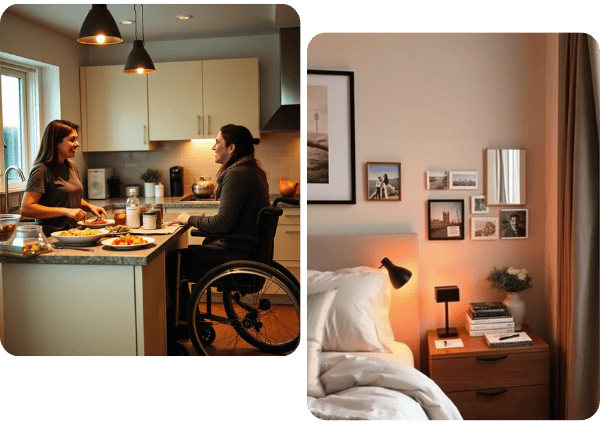
Choosing an SIL provider is an important decision because support workers can become a regular part of a participant’s daily life. Families and participants should look for a provider that takes time to understand individual goals, communication preferences, routines and support requirements.
Good communication is also important. Participants should understand what support is available, who will provide it, how concerns can be raised and how their preferences will be respected.
For participants considering SIL support in Parramatta and surrounding areas, local service availability may also be relevant. A provider familiar with the local community can help participants access nearby shops, appointments, activities, services and other community opportunities.
What Should Families Consider Before Choosing SIL?
Families can start by considering what the participant wants from their living arrangement rather than focusing only on the type of accommodation available. Their preferred location, daily routine, level of independence, accessibility requirements and social preferences can all help shape the right support arrangement.
It is also useful to discuss how support will be delivered. Participants and families may want to understand staffing arrangements, daily routines, housemate compatibility, communication processes, emergency procedures and how changes in support needs will be handled.
Understanding SIL and NDIS Funding
SIL funding is connected to the participant’s disability-related support needs and the level of assistance required to live as independently as possible. Funding and eligibility are determined through the NDIS planning process, so not every participant will have SIL included in their plan.
NDIS arrangements and funding rules can change over time. Participants should consider their current plan and circumstances and seek appropriate guidance when reviewing whether SIL is suitable for their needs.
Supported Independent Living in Parramatta
For people looking for disability support in Parramatta, SIL can be one option to consider when regular assistance with daily living is required. A local support provider can help participants understand available services and discuss how support may fit into their individual goals and routines.
Accucare Health Solutions supports NDIS participants with personalised services designed around individual needs, preferences and goals. From supported living arrangements to everyday assistance and community participation, the focus is on helping participants build confidence and maintain as much choice and independence as possible.